
First real job, first paycheck, first financial decisions.
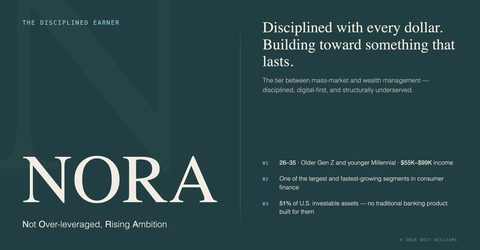
Disciplined with every dollar. Building toward something that lasts.

The income arrived. Now the wealth building begins.
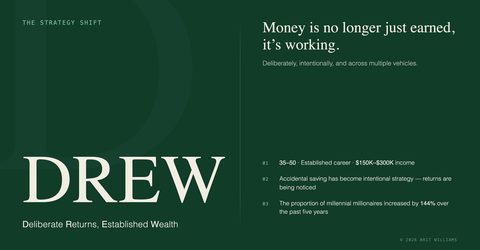
Money is no longer just earned, it's working.
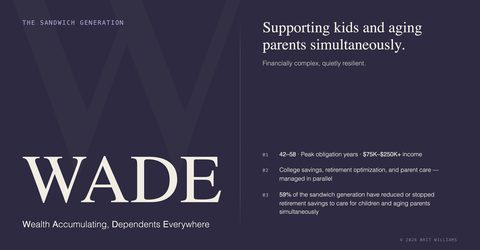
Supporting kids and aging parents simultaneously.
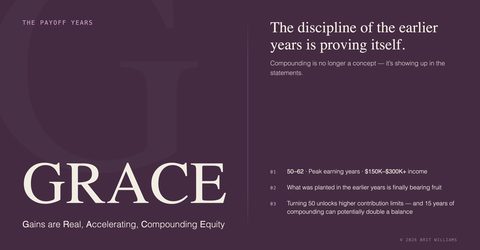
The discipline of the earlier years is proving itself.

The scorecard has shifted from earning to protecting.
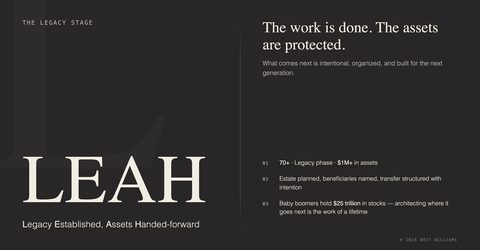
The work is done. The assets are protected.
NORA · Not Over-leveraged, Rising Ambition
Ages 26–35. Income $55K–$99K. 3 to 8 years into a career, and rising. NORA tracks spending, contributes to a 401(k), knows the difference between a high-yield and a standard savings account, and has probably already moved that money. NORA has built an emergency fund, but not a substantial investment portfolio yet.
The industry has spent years chasing HENRYs (High Earners, Not Rich Yet). But "rich" isn't what you earn, it's what you keep and protect. By that measure, HENRY isn't the target. NORA is: disciplined by choice, digital-first, self-directed, and accountable for every dollar in and out.
NORA needs more than the mass-market product suite and earns too little to unlock wealth management, which doesn't start until $250K–$1M in investable assets. And yet this segment controls 51% of all U.S. investable assets: 39 million households waiting for a bank built for where they're headed, not just where they are.
The institution that builds for NORA supports a generation rather than a segment.